Digital dentistry has changed how dental clinics and laboratories approach models, surgical guides, splints, dentures, and temporary restorations. Instead of relying entirely on traditional fabrication methods, dental professionals can now move from digital scans and designs to physical components through additive manufacturing.
A 3D dental printer plays an important role in this workflow by converting digital dental designs into precise physical objects. However, purchasing a printer is only one part of the process. Users also need to consider compatible materials, software, post-processing, application requirements, and workflow integration.
For clinics and laboratories evaluating a 3D printer for dental applications, understanding how the technology fits into daily production can make equipment selection more practical and informed.
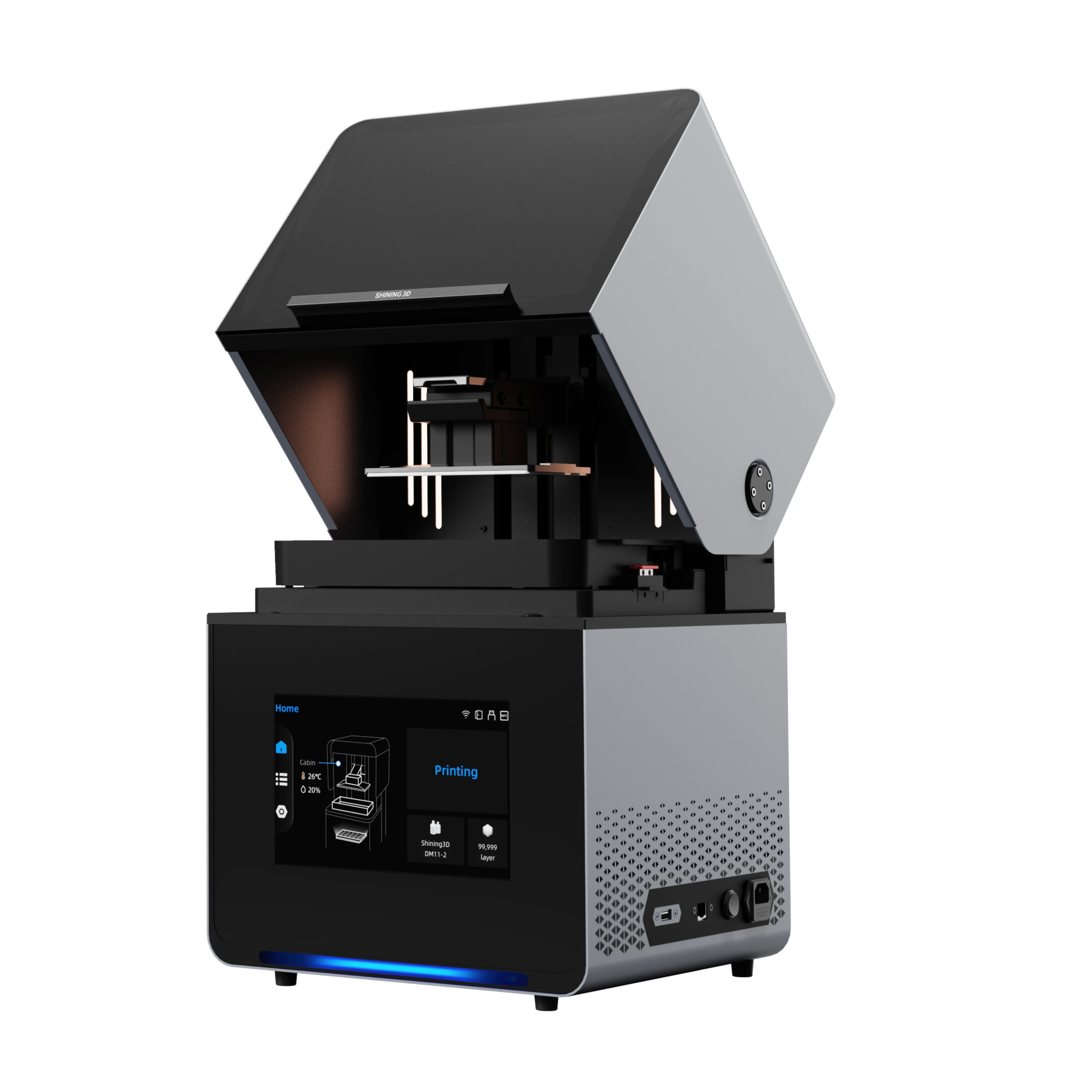
From Digital Scan to Printed Dental Application
The typical dental 3D printing workflow begins with digital data. An intraoral scanner or laboratory scanner captures the patient’s oral structures and generates a digital model. Depending on the case, the data can then be processed using dental design software to create the required application.
Once the design is completed, the file is prepared for printing. The operator selects the appropriate material, configures the printing parameters, and sends the job to the printer. After printing, the part usually requires washing, post-curing, support removal, and inspection before it can move to the next stage.
This workflow connects several technologies rather than treating the printer as an isolated device. SHINING 3D DENTAL, for example, integrates scanning, design, printing, materials, and post-processing within its digital dentistry ecosystem.
The result is a more structured digital workflow in which each step can be managed according to the specific clinical or laboratory application.
What Can a 3D Dental Printer Produce?
One of the most important questions when evaluating dental printing equipment is what applications it can actually support. The answer depends on the printer, material, software, and intended use.
Dental Models
Dental models are among the most common applications. Printed models can support diagnosis, treatment planning, orthodontic workflows, restorative procedures, and laboratory production. Compared with conventional model fabrication, digital printing allows users to store and reproduce digital files when needed.
Surgical Guides
A 3D dental printer can also produce surgical guides designed from digital treatment plans. In implant workflows, printed guides can help transfer planned positioning information into the clinical procedure. SHINING 3D DENTAL offers dedicated surgical guide resins alongside its printing solutions.
Splints and Orthodontic Models
Dental printing can support hard and soft splint applications as well as orthodontic models. The material needs to correspond to the intended application, since different products have different mechanical and biocompatibility requirements.
Dentures and Temporary Restorations
Digital printing is also used for denture bases, try-in applications, temporary crowns and bridges, and provisional All-on-X workflows. SHINING 3D DENTAL lists materials for these applications within its dental resin portfolio.
This range of applications is important because a printer that supports several workflows can potentially be integrated into different production stages rather than being limited to one specific case type.
Choosing Between DLP and LCD Technology
When selecting a 3D printer for dental production, printing technology is another important consideration. DLP and LCD are two common light-curing technologies used in dental printing.
DLP technology uses a digital projector to cure an entire layer according to the projected image. This approach can provide efficient layer exposure and is often suited to workflows where productivity and detailed reproduction are important.
LCD printers use an LCD screen to selectively expose resin during the printing process. They can offer detailed reproduction while providing a practical option for different dental applications.
SHINING 3D DENTAL provides both DLP and LCD printer options. Its portfolio includes the AccuFab-F1 and Ceramix-Nano using DLP technology, as well as the AccuFab-CEL and AccuFab-Aris using LCD technology.
Rather than choosing a technology based only on specifications, users should consider the applications they handle most frequently, expected production volume, available workspace, material requirements, and overall workflow.
Material Compatibility Matters as Much as the Printer
A printer’s capabilities are closely connected to its materials. Different dental applications require different resin characteristics, so material selection should be considered before purchasing equipment.
For example, model resin is intended for dental models, while specialized materials can be used for surgical guides, splints, denture bases, gingiva masks, temporary crowns and bridges, and other applications.
An open material system can also provide greater flexibility. SHINING 3D DENTAL states that its dental printers support a broad range of resin materials, including compatible third-party materials, allowing users more options when selecting materials for different workflows.
At the same time, not every dental resin is intended for intraoral use. Users should always verify the material’s intended application, regulatory status, processing requirements, and compatibility before using it for a specific clinical purpose.
Post-Processing Is Part of the Printing Workflow
Printing does not necessarily finish the production process. Resin-based dental applications commonly require washing and post-curing after printing. Support structures may also need to be removed, followed by cleaning and quality inspection.
For this reason, a practical 3D dental printer setup should consider post-processing equipment as part of the complete workflow. SHINING 3D DENTAL offers solutions such as FabWash, FabCure N2, and FabCure 2 for washing and curing processes.
Integrating these stages can help reduce unnecessary manual handling and establish a more consistent production routine.
What Should You Consider Before Buying?
The right 3D printer for dental applications depends on more than resolution or printing speed. Before making a decision, users should evaluate several practical factors.
First, consider the applications the printer needs to support. A laboratory producing models, splints, surgical guides, and temporary restorations may require a different setup from a clinic focusing primarily on chairside applications.
Second, examine material compatibility and whether the system is open or restricted to specific materials. Third, consider integration with existing scanners and design software. Finally, evaluate post-processing, operating space, maintenance requirements, workflow capacity, and the availability of technical support.
SHINING 3D DENTAL’s printer comparison, for example, includes factors such as layer thickness, connectivity, printing technology, detection functions, and compatibility with Accuware design software.
Building a More Connected Digital Workflow
The value of dental 3D printing is not limited to the physical printer. Its practical role becomes clearer when scanning, design, printing, materials, and post-processing are connected into one workflow.
For dental clinics and laboratories, this approach can support more predictable digital production across multiple applications. It also provides a structured way to manage digital files, materials, equipment, and processing steps as printing requirements expand.
With its combination of DLP and LCD printers, dental materials, design software, and post-processing equipment, SHINING 3D DENTAL provides an ecosystem designed around different stages of digital dentistry.
Bringing Digital Designs into Dental Production
A 3D dental printer is best understood as one component of a broader digital production process. From dental models and surgical guides to splints, dentures, and temporary restorations, the technology can support a wide range of applications when the printer, material, software, and post-processing steps are properly matched.
For clinics and laboratories considering a 3D printer for dental workflows, the key is not simply finding a machine with impressive specifications. It is finding a system that fits existing processes, supports the required applications, provides suitable material options, and can scale with future production needs. With a connected approach to digital dentistry, SHINING 3D DENTAL offers a range of printing and workflow solutions designed to help users move efficiently from digital data to physical dental applications.