
High-density metropolises face a complex transport challenge: moving large numbers of people efficiently while reducing greenhouse gas emissions, air pollution, and energy consumption. With congestion increasing on major urban roads, public transportation has an important role in limiting the environmental impact of daily mobility. Electrifying city bus fleets is one way to achieve these goals, but the results depend on more than replacing diesel vehicles with battery-powered alternatives.
A successful transition requires coordinated decisions about route planning, passenger demand, charging infrastructure, electricity sources, and vehicle lifecycle management. Understanding how these factors interact helps public transport authorities reduce emissions without compromising service reliability or accessibility.
Eliminating Tailpipe Emissions on Busy Urban Roads
Diesel buses emit carbon dioxide during operation, along with nitrogen oxides and particulate matter that contribute to urban air pollution. These pollutants are particularly concerning in densely populated areas, where buses frequently operate near residential buildings, schools, pedestrian zones, and commercial districts.
A battery-electric bus produces no tailpipe emissions while driving. Replacing diesel vehicles can therefore improve local air quality along frequently served routes, especially where traffic density is high and buses spend considerable time stopping and accelerating.
However, eliminating exhaust emissions does not mean eliminating every source of pollution. Electricity generation, battery production, vehicle manufacturing, and maintenance all contribute to a vehicle’s environmental footprint. The overall climate benefit depends partly on how electricity is generated and how efficiently the vehicle operates.
For cities planning fleet electrification, prioritizing heavily used routes can be an effective starting point. Buses that travel long distances each day generally have more opportunities to displace diesel consumption than vehicles with limited operating hours.
Improving Energy Efficiency Through Regenerative Braking
Urban driving involves frequent acceleration, braking, and idling. These conditions can increase fuel consumption in conventional buses, particularly on crowded routes with closely spaced stops.
An electric drivetrain can recover part of the vehicle’s kinetic energy during deceleration through regenerative braking. Instead of losing all this energy as heat through conventional braking, the system converts some of it into electricity and returns it to the battery. The amount recovered depends on driving behavior, road gradients, battery conditions, and traffic patterns.
Vehicle efficiency also depends on factors such as tire pressure, passenger load, heating and cooling requirements, and auxiliary equipment. Air conditioning can be especially important in cities with hot summers or cold winters, where climate control operates for extended periods.
Fleet operators can improve performance by monitoring energy consumption across individual routes and comparing results under similar conditions. Driver training, preventive maintenance, and realistic energy-use targets help identify avoidable losses without requiring major infrastructure changes.
Increasing Passenger Utilization to Reduce Emissions
Vehicle electrification is only one part of the decarbonization equation. Public transportation also reduces emissions by moving multiple passengers in a single vehicle rather than requiring each person to travel separately by car.
The relevant measure is often emissions per passenger-kilometer, which accounts for both the distance traveled and the number of people transported. A well-utilized bus can distribute its operating emissions across many passengers, whereas a nearly empty vehicle may deliver fewer environmental benefits relative to its energy consumption.
Cities can improve passenger utilization by adjusting service frequency to match demand throughout the day. Additional departures during peak periods help manage crowding, while carefully planned off-peak schedules can prevent unnecessary vehicle mileage.
Route integration is equally important. Coordinating bus services with metro stations, commuter rail, and other transport hubs makes public transportation more convenient for journeys involving multiple connections. Dedicated bus lanes and reliable timetables can further improve travel times, making shared mobility a more attractive alternative to private cars.
These measures strengthen the benefits of an electric city bus fleet by combining lower vehicle emissions with more efficient passenger movement.
Designing Charging Infrastructure Around Real Operating Conditions
Charging infrastructure can determine whether an electrified fleet performs reliably in daily service. Operators must consider depot capacity, grid connections, charger availability, electricity tariffs, and the time each vehicle spends out of service.
The first step is to analyze actual bus schedules. Daily mileage, route gradients, passenger loads, seasonal temperatures, and heating or cooling demand all influence energy requirements. Charging plans should provide sufficient capacity for normal operations while allowing a reasonable margin for unexpected delays or increased consumption.
Depot charging is often suitable for buses with predictable overnight parking periods. Opportunity charging at selected terminals may help vehicles operating long shifts or routes with limited depot access. The appropriate approach depends on local geography, timetable constraints, and infrastructure costs.
Operators should also coordinate with electricity providers before expanding their fleets. Grid upgrades can require substantial planning, particularly when many vehicles need to charge simultaneously. Where feasible, managed charging can distribute electricity demand across available time windows and reduce peak loads.
Using Cleaner Electricity and Measuring Lifecycle Emissions
The carbon benefits of electrification depend partly on the electricity supplying the fleet. Charging with electricity generated from low-carbon sources generally reduces operational greenhouse gas emissions compared with relying on carbon-intensive generation.
Cities can explore renewable electricity procurement, on-site solar generation, and energy storage where local conditions support these options. However, solar output, charging demand, and vehicle schedules must be coordinated carefully. Renewable generation alone may not provide sufficient power during every charging period.
Lifecycle assessment provides a broader view of environmental performance. It considers emissions from raw material extraction, battery manufacturing, vehicle production, electricity generation, maintenance, and end-of-life treatment. Although battery production creates an initial environmental cost, operational savings can offset part of this impact over the vehicle’s service life.
To evaluate progress, transport authorities should track electricity consumption per kilometer, annual mileage, passenger occupancy, charging losses, vehicle availability, and estimated greenhouse gas emissions. Comparing these indicators with historical diesel-fleet data provides a more reliable basis for investment decisions than measuring tailpipe emissions alone.
Battery health monitoring and responsible recycling arrangements can further support long-term resource efficiency.
Building a More Sustainable Urban Transport Network
Reducing the carbon footprint of urban mobility requires an integrated approach. Electrification delivers stronger results when cities combine efficient vehicles with high passenger utilization, well-designed charging systems, cleaner electricity, and consistent lifecycle monitoring. These measures help control operating costs while supporting dependable public transportation.
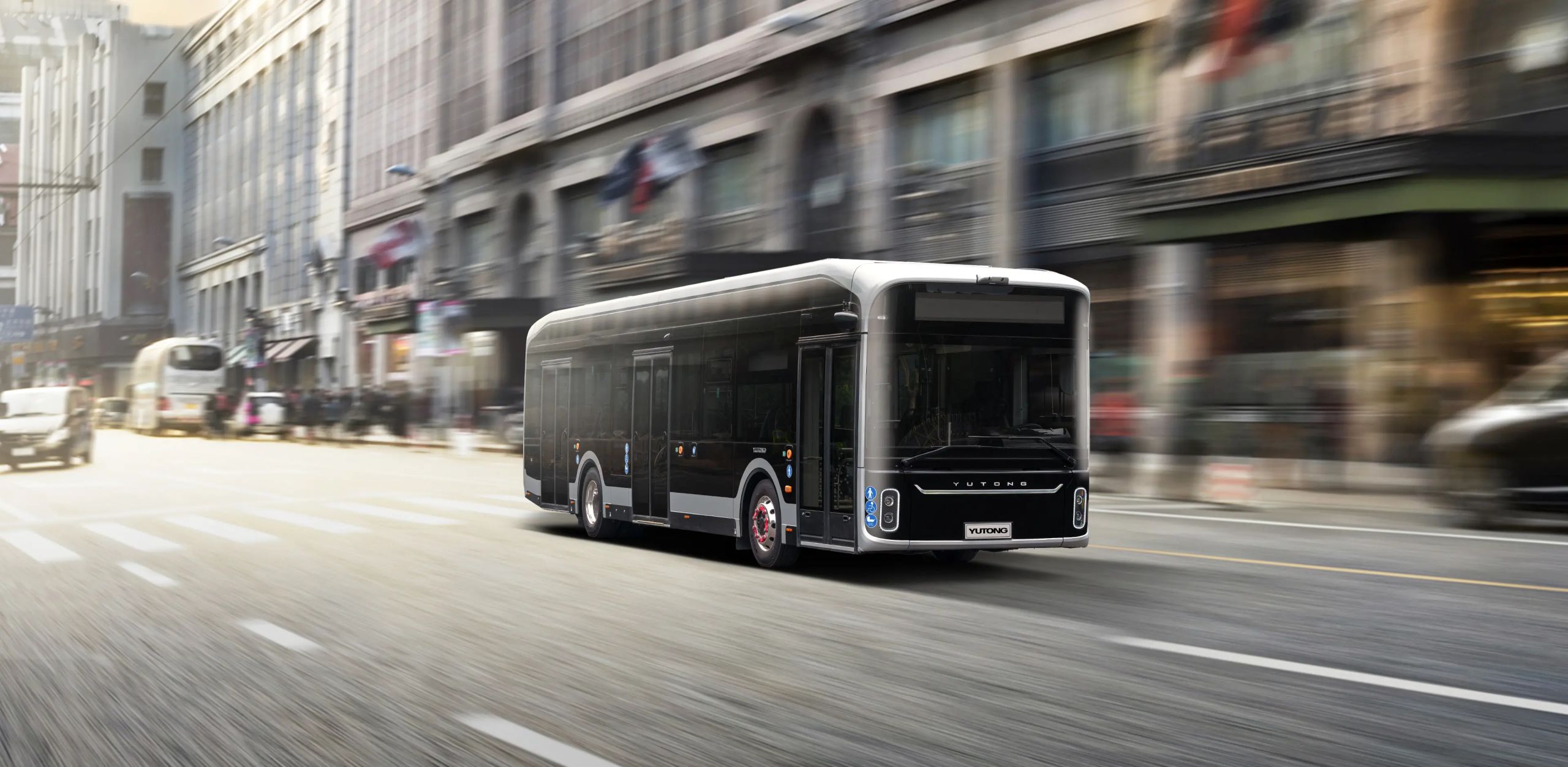
Yutong Bus contributes to this transition with the U12, a 12-meter battery-electric model designed for urban main roads, with a driving range of up to 700 km under SORT2 test conditions. For transport operators, matching vehicle specifications to actual route demands remains essential to building a cleaner and more efficient urban bus network.