For manufacturers investing in a PVC foam board project, equipment delivery is only the beginning. Installation, commissioning, parameter adjustment, troubleshooting, and maintenance can all affect how quickly a new line reaches stable production. This becomes more important for overseas factories working with suppliers in different time zones. Reliable technical assistance can help production teams resolve issues without waiting for an engineer to travel to the plant.
For buyers evaluating a pvc foam board extrusion line, technical support should therefore be considered alongside equipment configuration, output, and price.
Why Technical Support Matters After Equipment Delivery
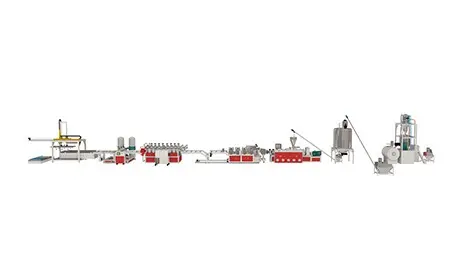
A new production line may involve several coordinated sections, including the extruder, T-die, forming platform, traction system, cutting machine, and stacking system. Boyu’s published PVC foam board configuration uses a 16-roller traction machine as part of the complete line.
A problem in one section can affect the performance of another. For example, unstable feeding can influence extrusion output, while incorrect traction conditions can affect board dimensions. Operators need to distinguish between process adjustments and equipment faults instead of changing parameters randomly.
Technical support provides a structured way to address these situations. Installation guidance helps confirm that equipment is assembled correctly, while commissioning support can help production personnel establish suitable operating conditions for the intended material and board specification.
Support Should Cover Installation and Commissioning
Installation is a critical stage because an incorrectly assembled line can create problems that appear to be process-related. Before commissioning, the production team should confirm electrical connections, mechanical installation, auxiliary equipment, material feeding, and the operating environment.
The control system is another area requiring attention. The PVC foam board line published by Boyu uses PLC-programmed control, with Omron or Siemens available as options. Familiarizing operators with the control interface, alarms, and basic operating procedures can reduce confusion during startup.
Commissioning should then proceed in a controlled sequence. Instead of immediately targeting maximum production speed, the technical team can verify individual sections and gradually establish stable operating conditions. This approach gives operators a clearer reference for future production.
Troubleshooting Should Focus on the Actual Cause
When a pvc foam board production line experiences an abnormal condition, the fastest solution is not always the most obvious adjustment. A change in product thickness, for instance, may involve material preparation, extrusion conditions, forming, or traction.
A useful troubleshooting process starts by recording what changed. Operators can check when the problem appeared, which product specification was running, whether material batches changed, and whether any machine parameters were recently adjusted.
Remote technical support becomes particularly useful here. Photos, videos, alarm information, production records, and parameter data can give engineers a clearer picture of the situation. This allows the supplier’s technical personnel to narrow down possible causes before recommending an adjustment.
Match Support With the Actual Equipment Configuration
Technical assistance is more effective when the supplier understands the exact machine configuration. Boyu’s published PVC foam board specifications include several configurations. For example, the listed crust foam board models include SZJZ80/156 and SZJZ92/188, while the co-extrusion configuration uses SZJZ80/156 together with SZJZ65/132.
The published production capacities range from 400 kg/h to 550 kg/h for the listed configurations, while production widths and thicknesses vary according to the selected model. These differences matter when troubleshooting because operating requirements are not necessarily identical across configurations.
For buyers, this means technical documentation should clearly correspond to the equipment actually ordered. Operators can then use the correct parameters, maintenance procedures, and troubleshooting instructions rather than relying on generic information.
Maintenance Support Helps Protect Long-Term Operation
Technical support should continue after commissioning. Regular maintenance can help production teams identify wear, material buildup, abnormal vibration, electrical issues, and other conditions before they develop into larger interruptions.
A supplier’s maintenance guidance can also help operators understand which tasks belong to daily inspection and which require qualified maintenance personnel. Clear records of alarms, downtime, replaced components, and recurring defects make later troubleshooting more efficient.
Boyu states that its technical support includes installation, optimization, troubleshooting, and maintenance assistance. This service structure is relevant to overseas manufacturers that need support throughout the equipment lifecycle rather than only during initial installation.
Consider Time Zones When Choosing a Global Supplier
For international projects, technical response time can have a practical impact on production management. A factory operating in Asia, Europe, the Middle East, or North America may not share normal working hours with its equipment supplier.
This makes communication channels and support arrangements worth confirming before purchase. Buyers can ask how technical issues are submitted, what information engineers need for remote diagnosis, how commissioning assistance is organized, and how spare-parts requirements are communicated.
Boyu has an established technical support function and serves the extrusion equipment market internationally. For a manufacturer purchasing a pvc foam board extrusion line, evaluating this support capability together with machine specifications can provide a more complete view of the supplier’s practical value.
A production line is a long-term manufacturing investment. Equipment specifications determine what the system is designed to produce, while effective technical support helps the production team operate, troubleshoot, and maintain that system in real factory conditions.