
Cooling systems in buses and other electrified vehicles depend on controlled fluid circulation to move heat away from components that must remain within their operating temperature range. The pump maintains that circulation, so its drive motor must deliver the required rotational performance in a demanding vehicle environment. Motor selection is therefore a system question rather than a simple power-rating exercise.
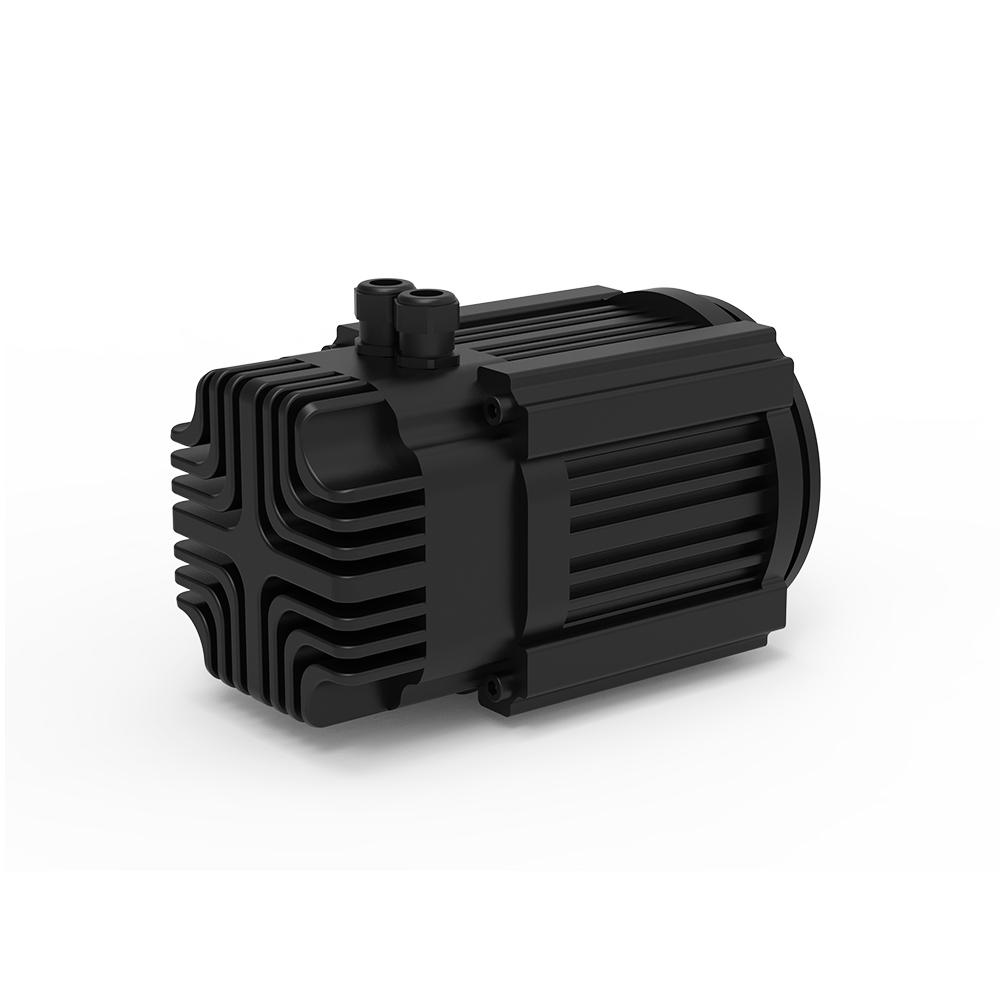
A brushless architecture is relevant because the pump needs repeatable rotation, controllable speed, and dependable operation over extended service periods. The referenced Power Motor solution is specifically presented for an electric bus cooling-system water pump, giving buyers a concrete example of how an automotive BLDC motor can be matched to a thermal-management application.
Why Cooling Pumps Place Different Demands on a Motor
A cooling pump does not move heat directly. It drives the hydraulic component that circulates coolant through the relevant circuit. Motor performance therefore has to support the pump’s required flow and pressure conditions.
That relationship makes operating speed particularly important. Changing pump speed changes the hydraulic operating point, while the motor must supply the mechanical input required by the pump. A suitable design therefore needs enough output capability without treating maximum speed as the only performance target.
Engineers should ask whether the motor can maintain required pump behavior across the intended operating range. Power supply, load, duty cycle, packaging, and thermal conditions should be considered before approval.
What the Power Motor Example Tells Engineers
The PBL0245024 configuration from Power Motor provides application-specific data rather than a generic BLDC description. The page identifies it as an electric bus cooling-system water-pump motor and lists 24 V, 658 mN·m torque, 281 W power, and 4,076 RPM speed. It also describes the product as high efficiency, long life, and IP6K9K rated.
Those figures provide a starting point for comparing the motor with the hydraulic and electrical requirements of its cooling circuit. They should not be interpreted as proof that the same configuration suits every vehicle or pump.
An automotive BLDC motor should ultimately be evaluated against the pump’s actual load curve, required speed range, electrical supply, and available installation space. Matching the motor to the pump is more meaningful than selecting a component from a vehicle-voltage category alone.
Why Electronic Commutation Matters in Thermal Management
Brushless DC motors replace mechanical brush-and-commutator switching with electronic commutation. That architecture removes physical brush contact and makes electronic control central to operation.
For a cooling pump, controllability can be useful because thermal demand is not necessarily constant. A control system can adjust motor operation according to the vehicle’s cooling requirements, provided the overall pump and controller are designed for that strategy.
Power Motor states that complementary drive electronics are available for its BLDC motors, including speed controllers, motion controllers, and integrated motion and speed control. The same page also lists incremental and absolute encoder options.
Such components should be considered according to the cooling architecture. Not every pump requires an encoder; the key question is whether the motor and electronics provide the required operating behavior.
Where Environmental Protection Becomes Part of Motor Selection
Vehicle cooling equipment may encounter moisture, contamination, temperature variation, and other environmental exposure. A motor’s environmental protection therefore cannot be separated from the application in which it will operate.
The referenced PBL0245024 page identifies an IP6K9K rating. That is a specific published characteristic of this model, not a general property of all BLDC motors. Engineers should verify the required protection level for their own installation and confirm the test basis applicable to the vehicle program.
Mechanical packaging matters at the same time. Motor diameter, length, mounting features, shaft arrangement, connectors, and the relationship between the motor and pump can determine whether a technically capable unit can actually be integrated.
How Buyers Should Evaluate the Complete Electric Motor Solution
Selecting an electric motor solution for a cooling pump requires more than comparing torque and speed. The buyer should define the pump’s hydraulic requirements first, then check whether the proposed motor can provide the necessary mechanical input throughout the operating range.
Electrical integration deserves the same attention. Input voltage, controller requirements, speed regulation, feedback options, and physical interfaces should be documented before prototype approval.
Power Motor presents the referenced unit as a motor solution for an electric bus cooling system and provides related drive-electronics and encoder options on the same product page. That breadth can simplify technical discussions, although each vehicle program still needs its own validation.
From Motor Specification to Cooling-System Performance
The value of an automotive BLDC motor in a cooling system is ultimately determined by how well it supports the pump and the vehicle’s thermal-management strategy. High speed or power alone does not establish suitability; the motor must operate at the required point while fitting the electrical, mechanical, and environmental constraints.
For procurement and engineering teams, the referenced 24 V PBL0245024 offers a useful documented example: 658 mN·m torque, 281 W power, 4,076 RPM speed, and an IP6K9K rating. These specifications can form the basis for a supplier discussion about pump matching, control, packaging, and environmental requirements.
A well-matched electric motor solution is therefore one that is evaluated as part of the cooling assembly, not as an isolated catalog component. That system-level approach gives vehicle developers a clearer path from motor selection to reliable coolant circulation and a validated thermal-management design.