A pharmaceutical bottle does not move directly from tablet counting to capping in every packaging format. Some products need an additional component placed inside before closure. In that sequence, the inserter machine works as the intermediate station. It receives an already filled bottle, completes insertion while the mouth is still open, and then passes the bottle forward for capping.
The Line Starts With Filling
The first stage is counting. Tablets or capsules are measured and released into an empty bottle according to the required quantity. At this point, the main product is inside the container, but the package is not yet complete.
The bottle then leaves the counting section on the conveyor. Its spacing needs to remain controlled because the next machine must receive each container in a predictable position. Irregular gaps can make insertion harder to coordinate.
This explains why insertion normally follows counting. The added component needs to enter a bottle that already contains the pharmaceutical product. Placing this step earlier would break the intended packaging sequence.
The Open Bottle Creates the Insertion Window
Between counting and capping, there is a short period when the bottle is filled but still open. The machine has to recognize the incoming bottle, perform the insertion, and release it without delaying the next container.
This position matters because capping closes access to the inside of the bottle. The required insertion therefore has to be completed before the capper receives the container.
Stable transfer also matters. The conveyor must carry the bottle through the station with controlled movement, while the insertion mechanism works at a pace that matches the flow coming from the counter.
A Bridge Between Two Different Operations
At the middle station, the equipment performs a task that neither the counter nor the capper can complete. It adds the required internal packaging component after the tablets or capsules are present. The bottle then continues along the same production path.
An inserter machine therefore acts as a bridge between two different operations. Upstream equipment handles product quantity. Downstream equipment closes the container. The inserter works while both conditions are true: the bottle is filled, but it is still open.
Timing is central here. If counting output slows, fewer bottles reach the station. If insertion takes longer than the available cycle, bottles can begin to queue before capping. The three machines must therefore be considered as one connected sequence.
Why Capping Follows Immediately
After insertion is complete, the bottle is ready to be closed. The capper receives the container and applies the closure. The package can then continue to later operations such as labeling, coding, inspection, or secondary packaging.
Putting capping after insertion creates a clear order: count the product, add the required internal component, then close the bottle. Each stage has a separate purpose, but the stages depend on one another.
This sequence also helps operators locate problems. If a bottle reaches capping without the required inserted component, the preceding insertion stage becomes the first area to examine. The process order makes the source of a disruption easier to narrow down.
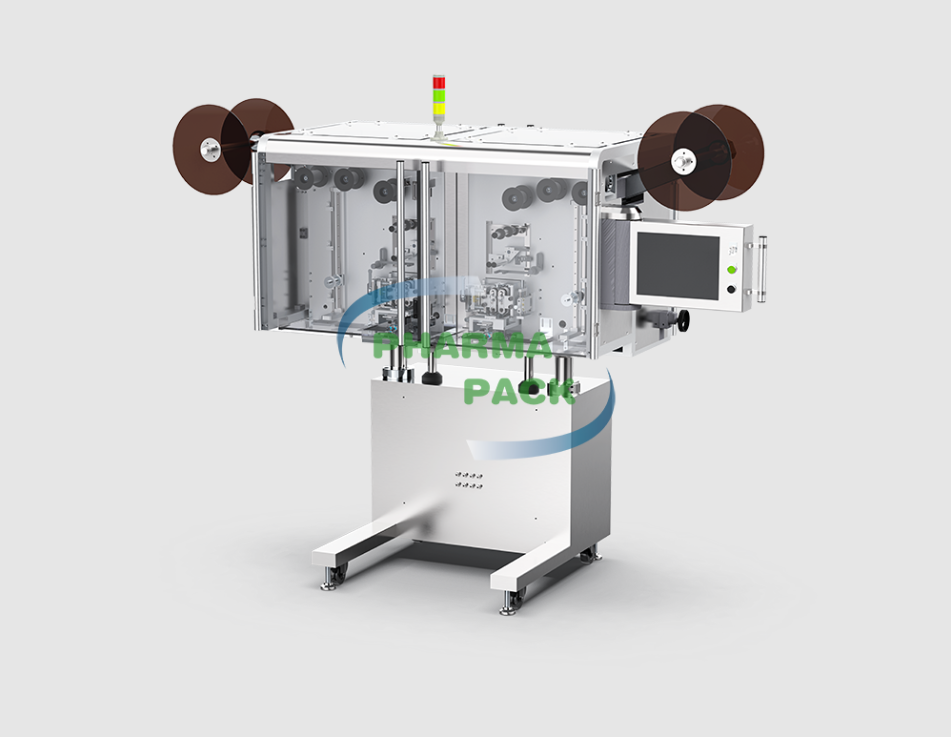
How LFID-40 Fits the Middle Step
A practical example is the LFID-40 Sacher Desiccant Inserter from Pharmapack. Its stated maximum production speed is 18,000 pieces per hour, depending on the size of the product being inspected. In a bottle line, that figure should be considered together with counting output and capping speed.
The LFID-40 is relevant because its job is not to count tablets or close bottles. It occupies the middle step where a desiccant sachet is inserted before final closure.
Rated speed alone does not describe the whole line. Total output also depends on how smoothly bottles move between the counter, inserter, and capper. One station running faster cannot compensate for poor transfer or a slower neighboring process.
Different Inserts, Same Process Position
Not every bottle line uses the same inserted material. Equipment configuration depends on the packaging requirement. A cotton inserting machine factory, for example, may focus on cotton insertion, while another application may use equipment for desiccant sachets.
The process position remains similar. Insertion takes place after the product has entered the bottle and before the closure blocks access to the bottle opening. The material may change, but the reason for locating the station between counting and capping does not.
When evaluating a cotton inserting machine factory, line integration is therefore an important technical point. The equipment must receive bottles from the counting section and release them in a condition that allows the capper to continue the sequence.
Following the Bottle Through the Line
The relationship becomes clear when the bottle itself is followed. First, tablets or capsules are counted into it. Next, the inserter machine adds the required internal packaging component. Finally, the capper closes the bottle and sends it onward.
Pharmapack develops smart bottle packaging lines as part of its packaging equipment activities, so inserter placement can be viewed within a wider line sequence rather than as a separate machine decision.
For a cotton inserting machine factory, the same basic logic applies. The insertion stage belongs in the short process window where the bottle has already been filled but has not yet been sealed. That is why it sits between counting and capping.