
Industrial solar projects combine large quantities of equipment with strict interface and delivery requirements. Panels, inverters, storage, mounting, switchgear, communications, and spares rarely share identical lead times, so procurement performance depends on coordination as much as price.
A solar pv supplier with both solar power and energy storage warehouse facilities can give project teams a clearer view of availability across the package.
Sunway Solar uses this model to offer wholesale modules, hybrid photovoltaic solutions, and complete storage products. The sourcing advantage appears when warehouse visibility is connected to engineering discipline: the storage system must still be sized for the actual industrial duty, documented, transported, installed, and commissioned accordingly, documented, transported, installed, and commissioned for the actual industrial duty.
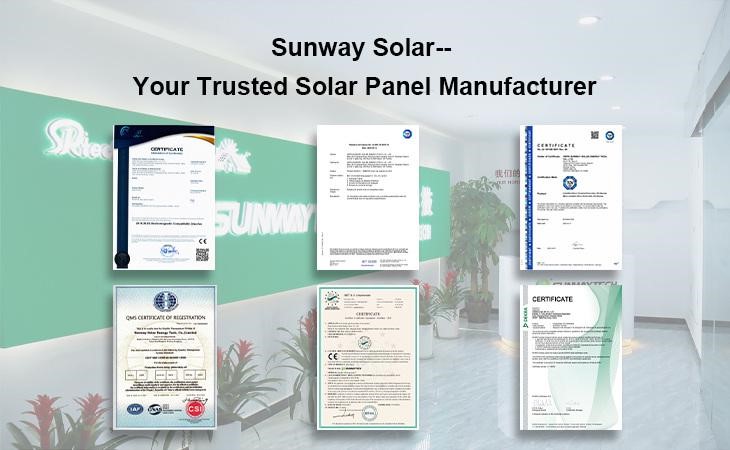
Direct international procurement also requires attention to standards and document language. Certification scope, grid compliance, labeling, manuals, and test reports should match the destination. Clarifying these items before payment and production prevents an available product from reaching the site without the evidence needed for approval.
Language in specifications and contracts should be precise about rated and usable values. Terms such as capacity, efficiency, and delivery can have different boundaries, so acceptance conditions should state where each measurement begins and ends.
Consolidated Sourcing Reduces Unnecessary Handoffs
Multiple vendors can increase the number of drawings, schedules, commercial terms, and logistics contacts that a project team must reconcile. A capable solar pv supplier can reduce those handoffs by coordinating panel supply, hybrid equipment, and storage under one service structure. The benefit is not simply a shorter vendor list.
It is the ability to compare stock status against the same construction schedule, align accessories with major equipment, and identify interface questions before shipment. A controlled bill of materials should still separate each model, quantity, certification, connector, communication device, and spare.
Warehouse personnel then know what can be allocated immediately and what remains subject to design approval or production. This visibility is particularly valuable for utility, commercial, and industrial work where a missing gateway or protection component can delay commissioning even when the main equipment has arrived.
Batch consistency matters on large orders. Panel electrical characteristics, inverter firmware, battery revisions, and communication accessories should be controlled so installers do not face multiple configurations within one project. Approved substitutions need engineering review, updated documentation, and traceability to the affected serial numbers.
Pre-shipment inspection can sample labels, quantities, packaging, serial numbers, and test records against the approved order. Findings should be closed before loading, when corrections are easier and less expensive than field rework after international transport.
Energy Performance Must Remain the Technical Priority
Storage should be selected from the facility’s load curve, solar profile, tariff structure, and resilience objective. A claim of efficient energy storage should be supported by usable AC energy, conversion efficiency, auxiliary cooling demand, charge and discharge limits, operating temperature, and expected cycling.
The warehouse can improve delivery readiness, but it cannot correct a power-to-energy ratio that does not fit the application. Industrial buyers should request single-line drawings, data sheets, communication protocols, derating information, factory test records, and a commissioning plan before release.
Transport and site access also require early review because large cabinets can impose significant weight and lifting constraints. When these conditions are resolved, warehouse availability becomes genuinely useful: equipment can move when the foundation, cables, protection, and receiving team are ready, instead of waiting in an unsuitable staging area.
The receiving plan should account for storage conditions as well as unloading. Batteries may require state-of-charge limits, periodic inspection, and temperature control during long holds. Modules, electronics, and cabinets should be protected from moisture, impact, contamination, and unauthorized access until installation begins.
Delivery dates should include customs and inland transport contingencies rather than treating vessel arrival as site availability. Project schedules become more realistic when every transfer, inspection, and receiving activity has an owner and a reasonable allowance.
China Sourcing Works Best as an End-to-End Service
The strongest supply model carries responsibility from quotation through technical clarification, inspection, packing, shipping, and start-up support. A reliable provider keeps the documentation package synchronized with the shipped equipment and gives project teams a clear escalation route for interface questions.
Sunway Solar links panel, hybrid PV, and storage supply through its warehouse network rather than treating each equipment category as a separate procurement stream.
That breadth can support efficient energy storage by reducing mismatched deliveries and preserving consistency across the photovoltaic and battery scopes. The company’s combination of factory products, warehouse visibility, and supplier assistance is a persuasive advantage for industrial buyers.
Used with careful engineering and site preparation, it can turn direct China sourcing into a controlled project process instead of a simple search for available inventory. Payment milestones can reinforce quality when they relate to documented events such as design approval, production completion, factory testing, inspection, and shipment.
This alignment gives both parties clear evidence of progress. It also reduces pressure to dispatch equipment before technical questions or receiving arrangements are resolved.
Supplier scorecards can capture documentation quality, response time, allocation accuracy, damage rate, and commissioning support. Repeated purchasing decisions then rely on project evidence and encourage continuous improvement across both the equipment and service relationship.