Airports are among the busiest public environments, with thousands of passengers using waiting areas every day. From international terminals to regional airports, seating systems should handle constant traffic while maintaining hygiene, comfort, and visual appeal. For airport operators and facility planners, choosing the right seating solution requires careful consideration of materials, maintenance requirements, and long-term durability.
Professional airport seating manufacturers address these challenges by combining advanced materials, practical designs, and hygiene-focused engineering. Features such as easy-to-clean surfaces, antimicrobial material options, and durable structures help create safer and more efficient passenger environments. Leadcom Seating designs waiting area seating solutions that seamlessly blend practicality, comfort, and aesthetics for bustling public environments.
Why Hygiene Has Become a Priority for Airport Seating Design
Airport seating experiences continuous contact from passengers throughout the day. Travelers may spend several hours in waiting areas, making cleanliness an important factor in passenger satisfaction. Traditional seating materials that absorb moisture or require complicated maintenance can create challenges for airport management teams.
Modern airport seating manufacturers focus on selecting materials that support frequent cleaning and long service life. Smooth surfaces, resistant finishes, and durable structures allow maintenance teams to perform regular sanitation procedures without causing excessive wear.
In addition to daily cleaning, many airports are also considering antimicrobial surface technologies. These materials are designed to help reduce the growth of microorganisms on frequently touched areas, supporting a cleaner public environment when combined with proper cleaning practices.
Selecting Materials for Easy Maintenance and Long-Term Use
Material selection plays a major role in creating effective waiting area seating solutions. Airport chairs need to withstand constant use, luggage impacts, cleaning chemicals, and changing environmental conditions.
Many manufacturers choose materials such as polypropylene, powder-coated steel, and other durable finishes because they offer strong resistance to daily wear. These materials are easier to wipe down and maintain compared with fabrics that may require more intensive cleaning procedures.
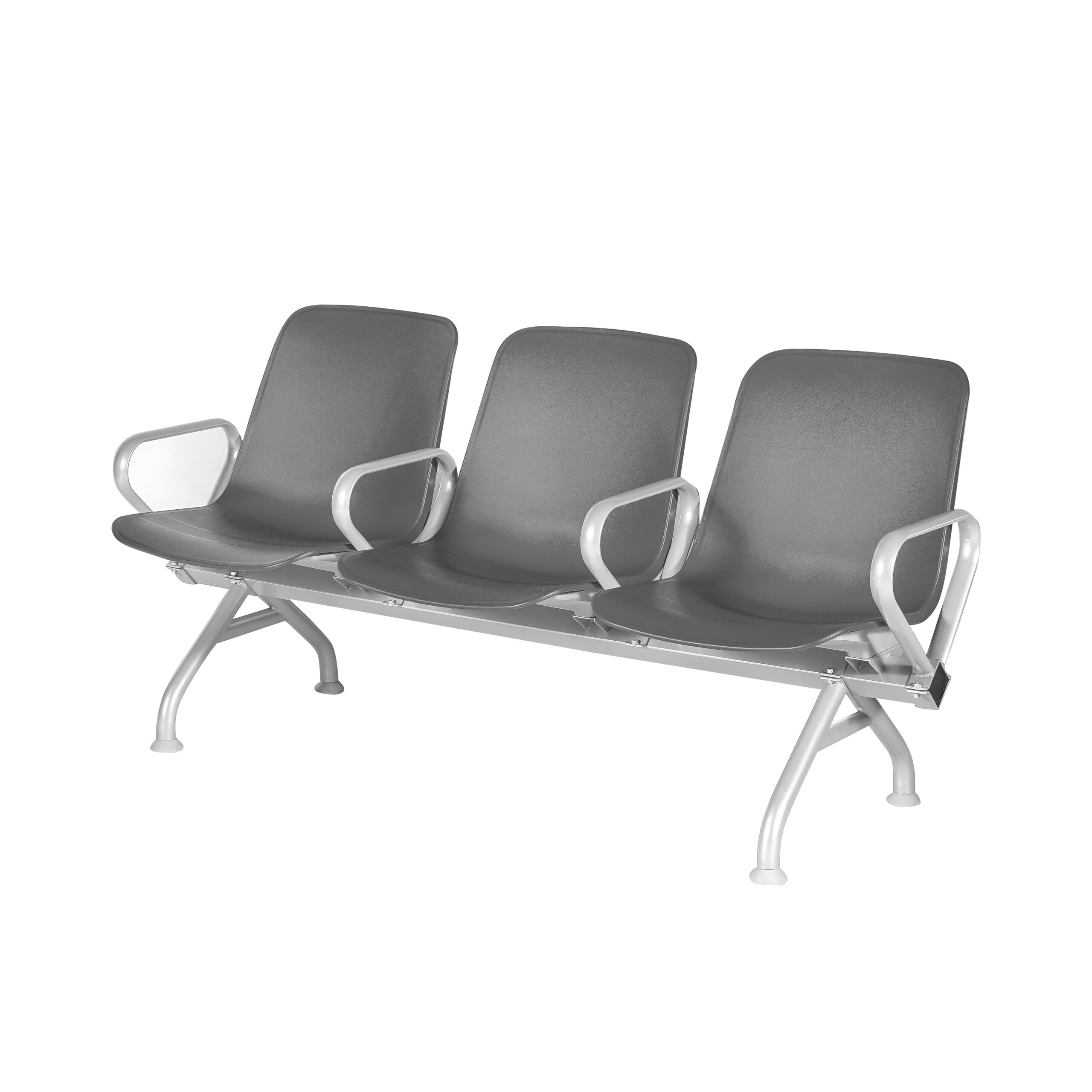
Leadcom Seating’s DARLIE LS-551 waiting chair demonstrates how material choices can support airport and public space requirements. The seat and back feature integral moulded PP padding, which provides a practical surface that is easy to maintain. The arm, leg, beam, and bracket components are constructed with steel and powder-coated finishes, creating a strong structure suitable for high-traffic environments.
This combination of materials helps the seating maintain its appearance and functionality even when installed in busy locations such as airport terminals, transportation facilities, and public waiting areas.
How Anti-Microbial Surfaces Support Cleaner Waiting Areas
Anti-microbial surfaces have become an important consideration for many public seating applications. In environments where many people share the same facilities, reducing surface contamination risks is a key part of modern design strategies.
An experienced airport seating manufacturer considers how different materials interact with cleaning processes and daily usage. Non-porous surfaces are often preferred because they are less likely to retain dirt and are easier to sanitize. When antimicrobial treatments are applied, they can provide an additional layer of protection between routine cleaning cycles.
However, antimicrobial features are most effective when combined with proper maintenance programs. Airports still require regular cleaning schedules, professional facility management, and appropriate hygiene procedures to ensure a consistently clean passenger experience.
Designing Airport Seating for Efficient Cleaning Processes
Cleaning efficiency depends not only on materials but also on seating design. Complex structures with difficult-to-reach areas can increase maintenance time and labor costs. Therefore, modern seating solutions often emphasize simple structures and practical configurations.
For airport operators, easy maintenance can improve operational efficiency. Seating that allows quick cleaning helps reduce downtime and ensures waiting areas remain available for passengers.
Leadcom Seating’s tandem seating and VIP lounge seating solutions are designed for demanding public environments. Their designs focus on durability, safety, and maintenance convenience, allowing businesses and public facilities to create comfortable spaces without increasing cleaning complexity.
Flexible configurations also allow airport planners to arrange seating based on passenger flow, available space, and operational requirements. This adaptability is especially important for airports where waiting areas should accommodate different passenger volumes throughout the day.
Balancing Passenger Comfort with Durability Requirements
While hygiene and maintenance are essential, passenger comfort remains a critical factor in airport seating design. Travelers often spend extended periods waiting before boarding, transferring, or receiving transportation services.
A reliable waiting area seating manufacturer should consider ergonomics alongside durability. Seat dimensions, support structures, and surface materials all influence passenger experience.
Leadcom Seating develops seating solutions that combine comfort with commercial-grade performance. Its airport and public seating products are engineered for frequent use while maintaining a professional appearance suitable for modern terminals and lounge environments.
By balancing ergonomic design with durable materials, manufacturers can help airports improve passenger satisfaction while reducing replacement and maintenance costs.
The Importance of Customized Seating Solutions for Airports
Every airport has unique requirements based on passenger capacity, architectural style, and operational needs. A flexible airport seating manufacturer can provide customized solutions that match different environments.
Customization may include seating layouts, material selections, finishes, and additional features designed for specific applications. For example, international terminals may require large-scale tandem seating arrangements, while premium lounges may prioritize comfort and refined aesthetics.
Through customized approaches, airport operators can create waiting areas that support passenger movement, maintain hygiene standards, and enhance overall facility design.
Building Cleaner and More Comfortable Airport Environments
Modern airports require seating solutions that go beyond basic functionality. Easy-to-clean materials, durable structures, and antimicrobial surface options help create safer and more efficient passenger spaces.
As a professional provider of airport seating and waiting area seating solutions, Leadcom Seating combines practical engineering with thoughtful design to support high-traffic environments. Products such as the DARLIE LS-551 demonstrate how material innovation and functional design can help facilities manage daily challenges.
For airport operators and project planners, selecting a seating partner with experience in durability, hygiene, and customization is essential for creating welcoming spaces that serve passengers effectively for years.